Profitability
Imported small parcels: what the new customs duty changes for sellers in France
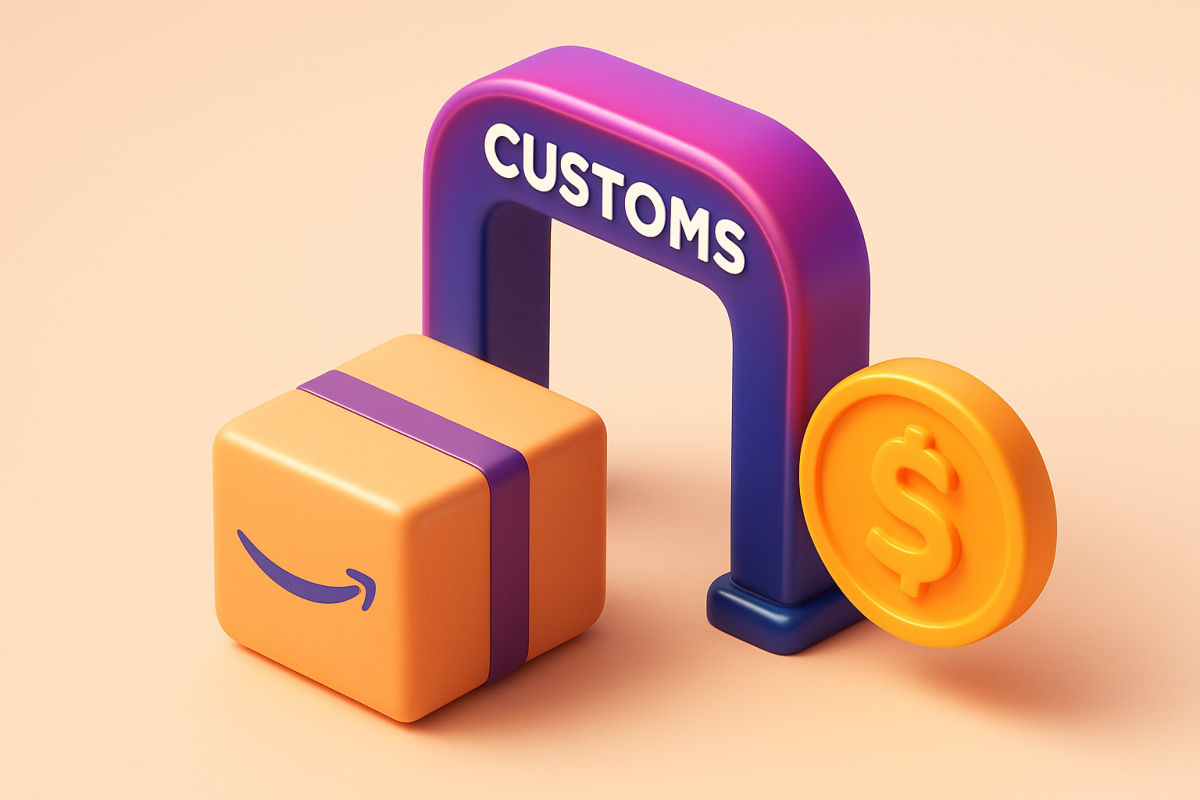
The duty on small parcels from non-EU countries changes the price gap with sellers who ship from abroad.
Key takeaways
- Compare your prices again with those of competitors shipping from outside Europe.
- Highlight fast delivery and local inventory in your listings.
- Watch for competitors moving their inventory into Europe.
What is changing for imported small parcels?
Since July 1, 2026, small parcels worth €150 or less entering the European Union from a non-EU country are subject to a flat customs duty of €3. Until now, these low-value shipments were exempt from customs duties, which gave an edge to sellers shipping directly from outside Europe to European customers.
The duty is not charged per parcel but per category of items in the parcel, based on customs tariff classification. The French government's Service-public.fr site gives the example of a parcel containing two toys, a coat, and two bottles of perfume: three categories, so €9. Several items in the same category trigger only one €3 duty. The European Commission presents the measure as temporary, pending a permanent customs regime for these shipments.
In France, the national small-parcel tax introduced on March 1, 2026, has been suspended from July 1, 2026, as a result of the new EU duty. This article focuses on sellers operating from France, but the EU duty applies across all member states.
Does the new duty close the price gap with sellers outside Europe?
No. It narrows it in some cases without eliminating it. A flat duty weighs more on a product sold for a few euros than on one sold for over a hundred. The effect therefore depends heavily on your price range and on how your competitors' parcels are made up.
You also need to look at how the cost is passed on. A foreign seller can absorb it in their margin, add it to the listed price, or show it at checkout. To know where you stand, reading the rule is not enough: you need to look at actual prices.
How do you compare your prices with competitors again?
By recording the price the customer actually pays, shipping and duties included, on your main products. Do not compare a price before fees with an all-in price.
- Select the products that make up most of your sales and where you compete with sellers shipping from outside Europe.
- For each one, record the total price paid by the shopper at three to five competitors: price, shipping, and any fees or duties shown at checkout.
- Note the delivery time promised for each offer.
- Compare with your own total price and delivery time.
- Repeat in a few weeks: foreign sellers often adjust their prices gradually.
This check should not push you to cut prices by reflex. First recalculate your margin with all your costs, as explained in our product-by-product profitability audit.
How do you highlight fast delivery and local inventory?
By making the concrete benefits of inventory held in France or elsewhere in Europe visible in your listings. When price does not always make the difference, delivery time and easy returns can.
| Benefit | Where to highlight it |
|---|---|
| Short delivery time | Shipping settings, eligibility for fast delivery programs |
| Simple returns within the country | Bullet points, description, return policy |
| Customer service in the local language | Description, answers to shopper questions |
| Compliance with EU rules | Compliance documents, safety information, markings |
Your fulfillment choice matters here. Inventory sent to Fulfillment by Amazon gives access to certain delivery badges, while shipping orders yourself requires careful settings to show a competitive delivery time. Our article on choosing between Fulfillment by Amazon and seller fulfillment covers the differences.
Stay factual. Do not claim that a competing product is non-compliant or poor quality: present your own verifiable advantages.
Should you expect competitors to move their inventory into Europe?
It is a possibility worth watching. When direct shipping gets more expensive, some sellers outside Europe may choose to store products in European warehouses, including marketplace fulfillment centers. Their delivery times then get closer to yours.
Several signals help you spot this shift:
- A competitor that showed a long delivery time suddenly offers delivery in a few days.
- Competing offers become eligible for fast delivery programs.
- A seller's shipping address or return details move to a different country.
A seller who stores inventory in Europe must also meet EU obligations, particularly on VAT. The basics are covered in our article on VAT and the One-Stop Shop. In that case, the delivery-time advantage partly disappears, and competition once again comes down to the offer, the content, and the service.
Frequently asked questions
Does the €3 duty apply to sellers shipping from France?
No. It targets small parcels entering the European Union from a non-EU country. A shipment sent from inventory held in France is not affected.
Is the duty charged only once per parcel?
No. It applies to each category of items in the parcel. A parcel containing items from three different categories therefore bears the flat duty three times.
Should you lower your prices in response?
Not necessarily. First record your competitors' actual prices and recalculate your margin. The new duty may, on the contrary, ease the pressure on your prices in some categories.