Strategy
Selling on several marketplaces: which one to start with
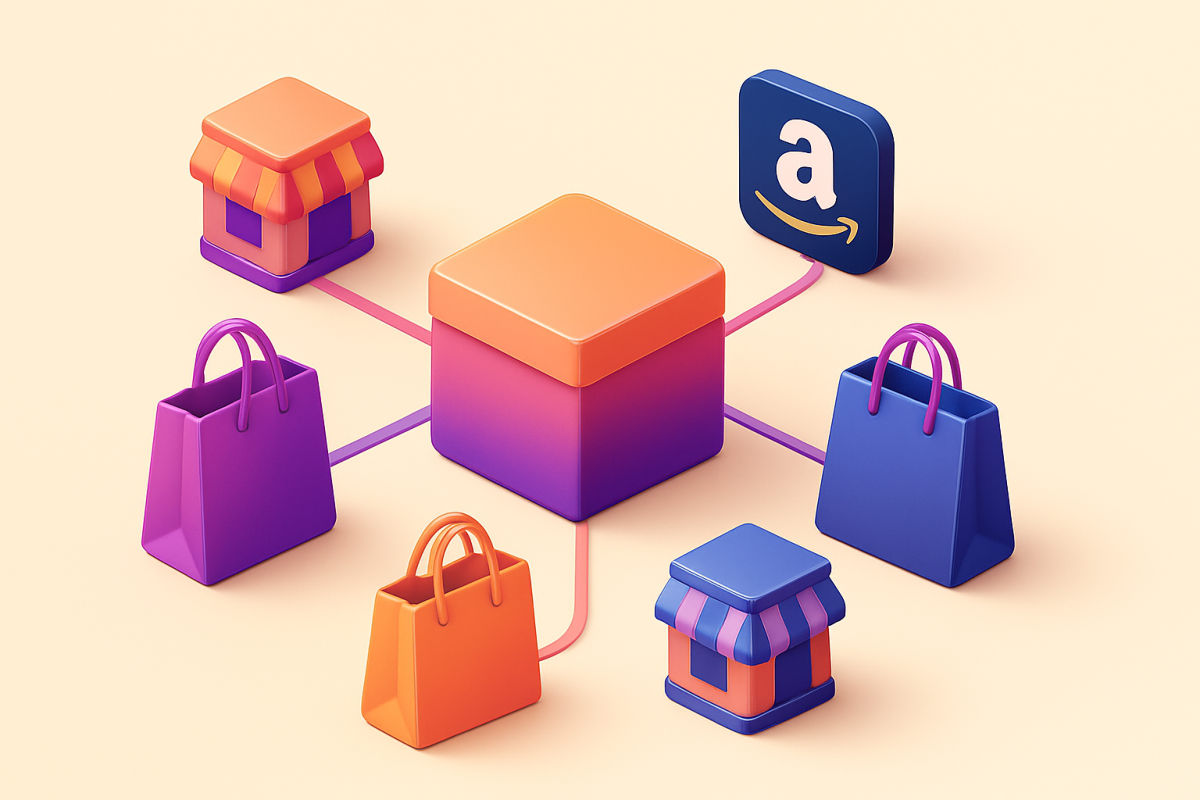
More channels also mean more work. One well-run second channel is better than five poorly managed ones.
Key takeaways
- Choose the marketplace where your category is already strong.
- Check that your inventory and logistics can keep up.
- A feed management tool becomes useful from three channels onward.
Do you really need to sell on several marketplaces?
Not necessarily, and not right away. A second channel reduces your dependence on Amazon and can reach customers you do not reach today, but it adds a catalog to maintain, orders to track, customer service to handle, and rules to follow. Each marketplace has its own performance requirements, and a poorly run account can be suspended just as on Amazon.
So the right question is not “how many channels?” but “can I run one more channel at the same level as the first?” One well-run second channel is better than five channels where shipping times slip, inventory falls out of sync, and messages go unanswered.
Before opening a new account, make sure your Amazon account is stable: metrics in the green, no open alerts, inventory under control. A second channel does not make up for a fragile first one.
How do you choose which marketplace to start with?
Start with the marketplace where your category is already strong. A general marketplace is not strong everywhere: some are known for home improvement and garden, others for books, media, and electronics, others for home goods. Selling where buyers already come looking for your type of product takes less effort to get visibility.
To get a clear picture, work in four steps:
- Search for your products and your competitors’ on each candidate platform. Note the number of offers, prices, and listing quality.
- Look at who sells: many third-party sellers, few sellers, or mostly the platform itself.
- Read the terms: commissions by category, subscription, required shipping times, categories that need approval.
- Estimate your margin product by product with those fees, before creating any account.
In France, our articles on Cdiscount, Fnac Marketplace, and ManoMano cover the specifics of each.
Can your inventory and logistics keep up?
This is the most underestimated condition. Selling the same inventory on two channels creates a risk of overselling: a product sold on one platform just after it sold on the other. An order canceled for lack of stock hurts your metrics on every marketplace.
Ask yourself these questions before you start:
- Where is your inventory? Inventory held entirely in Fulfillment by Amazon is not available to ship another platform’s orders unless you use a multi-channel fulfillment service and confirm that the platform accepts it.
- Who ships, and how fast? Each marketplace sets shipping and tracking deadlines. Your operation must meet them on peak days.
- How is inventory updated? Manually, by file, or automatically? How often?
- Who answers customers on each platform, and how quickly?
- How do you handle returns coming from several channels?
If any of these answers is unclear, settle it before opening the channel, not after the first orders.
When does a feed management tool become useful?
A feed management tool becomes useful from three channels onward. With two channels, well-organized manual management is still possible, provided you update inventory often. Beyond that, the time spent and the risk of errors climb quickly.
A feed management tool centralizes your catalog, adapts listings to each platform’s format, syncs inventory and prices, and pulls orders into one place. It does not replace work on the listings: a poorly filled feed spreads the same errors everywhere.
| Number of channels | Possible setup | What to watch |
|---|---|---|
| 1 | Direct management in Seller Central | Dependence on a single platform |
| 2 | Manual or file-based management, frequent inventory updates | Overselling on peak days |
| 3 or more | Feed management or sync tool | Quality of the source data |
What mistakes should you avoid when opening a second channel?
Most difficulties come from launching too broadly. The most common mistakes:
- Opening several marketplaces at once without having broken in the first.
- Publishing the whole catalog at once instead of starting with your strongest products.
- Copying Amazon listings without adapting them to the new platform’s fields, categories, and rules.
- Matching prices without recalculating margin with each channel’s commissions.
- Neglecting customer service on a channel that starts slowly: early reviews matter a lot.
Start with a short selection, track results for a few weeks, then expand.
Frequently asked questions
Should you sell at the same price on every marketplace?
Not necessarily, because commissions differ. Calculate your margin on each channel. Also check each platform’s pricing rules, which may compare your prices with those offered elsewhere.
Can you use Fulfillment by Amazon inventory for another marketplace?
Amazon offers a multi-channel fulfillment service, but some platforms restrict the use of parcels branded with another site. Check each marketplace’s terms before using it.
How long does it take for a second channel to take off?
It depends on the category, the competition, and listing quality. Plan for a ramp-up period and judge the channel over several months, not the first few weeks.